


Carmina manufactures handmade shoes of the highest quality since 1866.
Goodyear Welted Shoes
Goodyear welted shoes were introduced in 1869 with the goal of creating durable pairs of shoes that could be easily resoled and rebuilt to extend the life of a single pair. High-quality shoes are made from the finest leather and, with moderate use, a pair of Goodyear welted shoes can be rebuilt 3 to 4 times.
How are Goodyear welted shoes constructed?
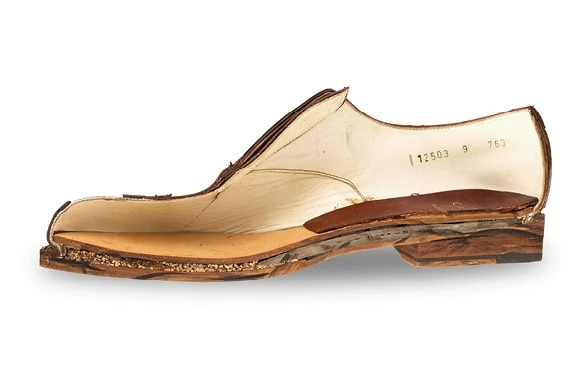
Essentially, a strip of leather is stitched to the upper of the shoe, which forms a welt onto which the sole is then stitched. Therefore, a space between the insole and the outsole is filled with a cork mixture that will be enclosed between the two leather soles.
This particular way of making shoes allows for easy resoling, and includes a cork filling that molds to the wearer’s unique foot shape. We’ve added a small illustration to show how our shoes are made: a strip of leather (the welt) is stitched to the upper, a cork filling is added over the insole, and the outsole is stitched to the welt.

Goodyear
Here’s a look at the process:

Goodyear stitching ensures durability, reparability, and timeless style.
How can you distinguish a Goodyear welted shoe from a Blake stitched shoe?
Essentially, Blake stitched shoes are rarely resoled, as doing so requires much more labor than with a Goodyear welted shoe. By placing your hand inside the shoe, you will feel the stitching on the insole of any Blake shoe. Goodyear welted shoes involve around 150 steps in the manufacturing process, while Blake shoes require around 50.
What is a closed channel?
Goodyear welted shoes have a channel, which is the small trench where the stitching connects the sole to the welt. If the channel were not closed, you would see the stitches on the sole. At Carmina, we cut into the sole to create a leather flap under which the sole is stitched to the welt. This flap is then pressed closed to conceal the stitching inside the sole. Closed channel shoes offer a more elegant look and require a higher level of craftsmanship.
Video
A closer look at the finishing process:


