


Mallorca has a long tradition of leather craftsmanship and shoemaking, with the town of Inca at its center. For generations, skilled artisans have produced footwear known for its quality and durability.
At Carmina Shoemaker, we continue to be part of this tradition, crafting our shoes in Inca using traditional techniques and the finest materials.
From Inca: Mallorca’s Shoemaking Tradition at Carmina
Mallorca is often described through its light, the Mediterranean and its landscapes. Yet inland, away from the island’s more familiar coastal image, there is another Mallorca: one of workshops, leather, lasts and handcrafted shoemaking.
That Mallorca is part of our history.
Carmina Shoemaker is deeply connected to Inca, a town at the heart of the island that has been linked for generations to leather and shoemaking. Its streets saw the growth of small family workshops, specialist shops and factories that helped shape an essential part of Mallorca’s industrial identity.
For us, to speak of Inca is to speak of origin. Of a patient, precise and inherited way of working. A way of understanding footwear in which every hide is examined before cutting, every piece is carefully shaped over the last, and every finish requires the eye of someone who knows the material from within.
Every pair of Carmina shoes carries something of that place: its history, its rhythm and its way of understanding the craft.
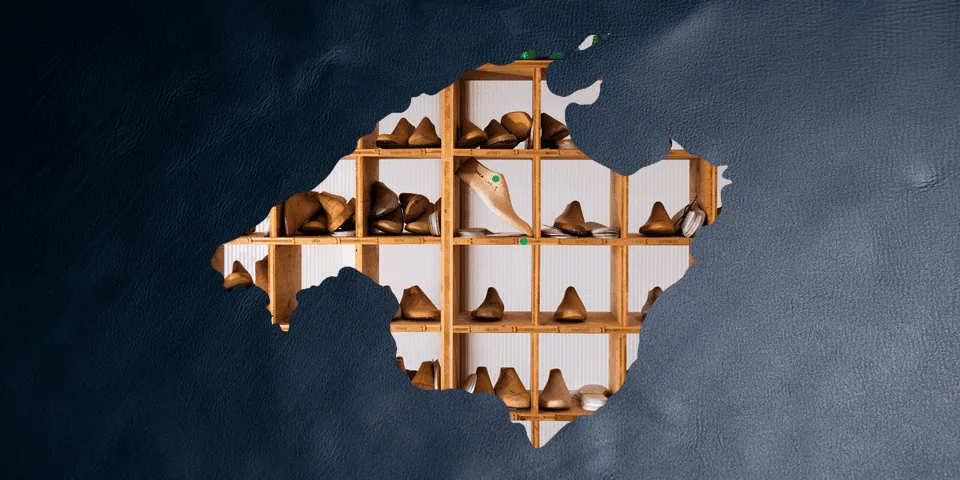
Inca and Mallorca’s Shoemaking Heritage
Inca is one of Mallorca’s historic centres of shoemaking and leather goods. Its growth as a shoemaking town became especially established during the nineteenth and early twentieth centuries, when many family workshops evolved into a local industry recognised for its work with leather.
But Inca’s importance cannot be understood through industry alone. It is also found in the families, artisans and workshops that passed down a very specific knowledge: how to select a hide, how to cut it, how to work with a last, how to shape a shoe and how to finish it with the right degree of precision.
That culture of careful, exacting work remains present in the way we make shoes. At Carmina, our connection with Inca is not merely a question of provenance; it is a way of keeping alive a shoemaking knowledge that forms part of Mallorca and of our own identity as a shoemaking house.
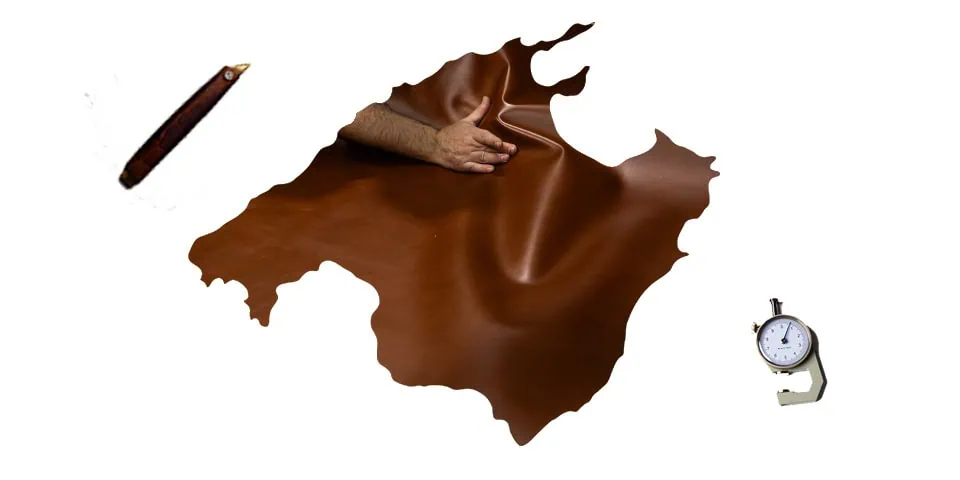
The Know-How Behind a Handcrafted Shoe
Handcrafted shoemaking requires time, precision and constant attention to every stage of the process.
A well-made shoe is born from a series of small but important decisions. The leather must be selected with care. The pattern must respect the shape of the model. The cutting must make use of the most suitable part of the hide. The closing of the upper must bring the pieces together cleanly and firmly. The lasting must give the shoe its shape without disturbing its balance.
Then come the construction, the stitching, the fitting of the sole, the trimming, the polishing and the final finish. Every step influences the result. Every gesture matters.
That is why, in our workshop, the hand of the artisan is not a decorative detail. It is an essential part of the process. Their experience allows them to detect what a machine cannot always interpret: the tension of a leather, the proportion of a last, the cleanliness of a seam or the exact depth of a finish.
That is where the true value of a shoe made to last begins.
Goodyear Welt Construction and Durability as a Form of Luxury
Among the most respected techniques in quality shoemaking is Goodyear welt construction, a method that allows for the creation of solid, durable shoes designed to be repaired and resoled over time.
At Carmina, this construction forms part of our way of understanding footwear. A Goodyear welted shoe is not conceived only for its first wear, but to accompany its owner for years, adapt to the foot and age with character.
This technique joins the upper, the insole and the sole through a resistant structure that gives stability to the shoe and extends its life. It is a more demanding process than other manufacturing methods, but also one of the most valued by those who seek high-quality handcrafted footwear.
For us, durability is also part of luxury. A good pair does not need to draw attention to itself. It is recognised in its proportion, in the quality of the leather, in the firmness of its construction and in the way it improves with use.
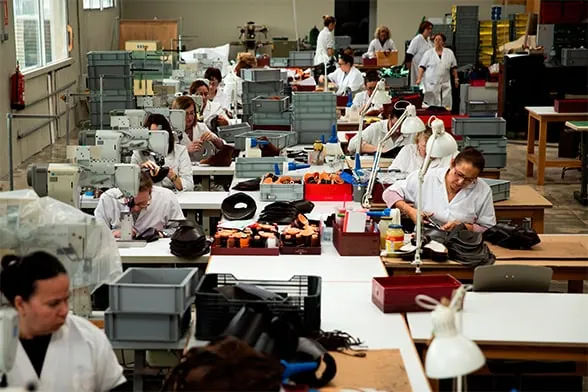
Carmina Shoemaker and the Family Legacy of 1866
Carmina’s history is deeply linked to Inca. Our family roots date back to 1866, when Matías Pujadas opened a bespoke shoemaking workshop in the town. That first workshop marked the beginning of a family tradition united by leather, craft and the pursuit of quality.
More than a century later, José Albaladejo, together with his wife, Carmina Ramis, and their children, continued that legacy by creating Carmina Shoemaker: a shoemaking house born in Mallorca with a clear vision: to create handcrafted shoes in Inca and bring Mallorcan shoemaking to clients around the world.
This continuity is an essential part of our identity. Carmina was not born from a trend or a passing idea. It was born from a family heritage, from a culture of careful, exacting work, and from a town where footwear forms part of the collective memory.
That is why, every time we make a pair in Inca, we are not simply shaping a shoe. We are continuing a story.
Shoes Made in Inca, Mallorca
All Carmina shoes are made in Inca, Mallorca. For those who wish to understand where each pair is born, the answer is not only geographical: it is born in an environment where shoemaking forms part of local life and where knowledge remains close to the workshop.
Making shoes in Mallorca allows us to maintain control over the process and a direct relationship with the artisans who shape each shoe. From the selection of the leather to the final finish, each pair passes through many hands before it is complete.
Some stages are technical; others depend almost entirely on the sensitivity of the artisan. The leather must lend itself well to cutting. The upper must be shaped with the right tension. The sole must be fitted cleanly. The final finish must enhance the character of the shoe without disguising the material.
In that balance between technique, time and sensitivity lies an important part of Carmina’s value.
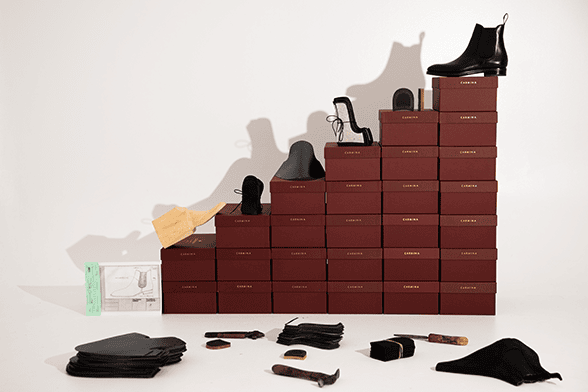
A Tradition That Continues in Every Client
Mallorca’s shoemaking tradition does not live only in workshops or family archives. It also lives in every person who chooses a shoe made with time, fine materials and respect for the craft.
Whoever wears a pair of Carmina carries more than a handcrafted shoe. They carry a part of Inca, of Mallorca and of a way of making shoes that has remained faithful to its essence while continuing to evolve.
That is perhaps the greatest strength of a tradition: not to stand still, but to keep moving forward.
A Legacy Still Worn Today
Mallorca’s shoemaking history has been built in workshops, families and expert hands that have kept a very particular knowledge alive. In Inca, leather has been industry, culture and a way of life.
Today, from our workshop, we continue to carry that legacy beyond the island. We do so in every cut, every last, every stitch and every pair that ends up in the hands of those who value authentic craftsmanship.
Because some crafts do not disappear when they are practised with respect.
They become a legacy.
And in Inca, that legacy is still worn.


